

First Impressions on TikTok: How Visible Engagement Shapes Viewer Perception
Scanning through TikTok does not necessarily involve deliberate analysis. The person views a video, and almost in an instant, something in his/her mind decides if the video is worth looking at. Hardly any of this decision is made by reading through the caption or the bio of the video. It all happens based on a few numbers that have been seen without realizing and way before any evaluation has even been done. This is the mechanism behind why creators spend so much energy trying to build social proof on TikTok well before a viewer has actually watched enough to form a real opinion about the content itself.
People tend to base their decisions on the actions of others. It is not a social media-specific phenomenon. Examples include restaurants that fill up faster than the ones nearby that have free seats, bestseller lists that help make the choice of which book to take from the shelf, or reviews that affect the buying decision before comparing any features of the product. The only thing that TikTok did was turn this natural process into a vertical feed and make the decision timeframe less than a couple of seconds. The reason why this particular process is superior to looking out of the window at a restaurant or seeing a bestseller list label on a book is that it is instantaneous.
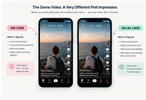
Before a viewer commits to watching an entire video, several numbers are already visible and already doing quiet persuasive work:
The like count sitting beside the heart icon
Comment count, which hints at how much discussion a video generated
Share count, which signals whether people found it worth sending to someone else
View count on the account or video, offering a rough sense of scale
None of these numbers requires reading. These things are virtually instantaneous in their perception, which is precisely why they hold such significance during those initial impression-making moments. It’s not like someone thinks about anything on an intellectual level – the numbers just set the tone before even the first frame of video is completely loaded. Two videos that are almost entirely identical, but one only has a few dozen likes and the other tens of thousands, would be viewed by the same individual with entirely different amounts of patience and goodwill.

Out of all of these signals, there is one particular signal that has immense psychological weight due to its placement on the screen and the speed with which the viewer can process it. The TikTok likes work as an easy vote of confidence, where any large number immediately indicates that someone else has already made their mind up about whether or not the content is worth watching. Bandwagoning at its purest, the viewer ends up outsourcing their own judgment to a bunch of strangers, and this makes all the difference from the moment a video starts playing, regardless of how many likes it has.
This is particularly true during the first few seconds of a video's existence. Once genuine watch-through data accumulates, the platform's algorithm starts relying on that behavioural signal more than any number on screen. But before that data exists, visible engagement is often the only information available, both to viewers deciding whether to keep watching and to the recommendation system deciding whether to show the video to anyone else at all.
The same signal that builds confidence can just as easily damage it. In any video having a lot of likes while the comments section consists of irrelevant and confused comments or general spam, it appears as if the high like number is fishy. Contemporary audiences have become quite adept at recognizing such inconsistencies in videos. An inconsistency between a huge number and actual conversation in the comments section always ends up eroding credibility rather than boosting it.
A more long-lasting way of creating engagement cues involves treating visible engagement as a result rather than a means. Some techniques lead to consistent engagement figures:
Provoking genuine reactions through the use of questions or relatable context at the beginning of a video
Replying to comments to sustain the discussion instead of leaving it dead
Posting regularly so that the engagement happens naturally
While there is no guarantee of virality in the future, it does ensure that the impression survives analysis.
All of these factors do not ensure virality, but they create an initial impression that stands up to close examination, which is more important than any impressive-looking single figure.
The impressions created in TikTok are made fast, and there is way more emphasis on visible engagement that a lot of creators know about when creating videos. Those who manage to survive over time in this platform are the ones whose first impression matches with their reality instead of opposing it the minute one scrolls past the surface impression.


